
Attentive Heterogeneous Graph Embedding for Job Mobility Prediction Authors: Le Zhang (University of Science and Technology of China)*; Ding Zhou (University of Science and Technology of China); Hengshu Zhu (Baidu Talent Intelligence Center, Baidu Inc.); Tong Xu (University of Science and Technology of China); Rui Zha (University of Science and Technology of China); Enhong Chen blogger.com - Free ebook download as Text File .txt), PDF File .pdf) or read book online for free He was a Principal Scientist at Amazon for building a grab-and-go shopping experience using computer vision, deep learning and sensor fusion technologies. He received his PhD from Xidian University in , and was a postdoctoral researcher at TTIC and University of Washington, respectively
Dr CHU, Samuel K.W. | HKU - Faculty of Education
Visual Computing for Industry, Biomedicine, and Art volume 2Article number: 7 Cite this article. Metrics details. With the explosion in the number of digital images taken every day, the demand for more accurate and visually pleasing images is increasing.
However, the images captured by modern cameras are inevitably degraded by noise, which leads to deteriorated visual image quality. Therefore, work is required to reduce noise without losing image features edges, corners, and other sharp structures. So far, researchers have already proposed various methods for decreasing noise. Each method has its own advantages and disadvantages. In this paper, we summarize some important research in the field of image denoising.
First, we give the formulation of the image denoising problem, and then we present several image how to do a dissertation xidian university techniques. In addition, we discuss the characteristics of these techniques. Finally, we provide several promising directions for future research. Owing to the influence of environment, transmission channel, and other factors, images are inevitably contaminated by noise during acquisition, compression, and transmission, leading to distortion and loss of image information.
With the presence of noise, possible subsequent image processing tasks, such as video processing, image analysis, and tracking, are adversely affected. Therefore, image denoising plays an important role in modern image processing systems. Image denoising is to remove noise from a noisy image, so as to restore the true image. However, since noise, edge, and how to do a dissertation xidian university are high frequency components, it is difficult to distinguish them in the process of denoising and the denoised images could inevitably lose some details.
Overall, recovering meaningful information from noisy images in the process of noise removal to obtain high quality images is an important problem nowadays.
In fact, image denoising is a classic problem and has been studied for a long time. However, it remains a challenging and open task. The main reason for this is that from a mathematical perspective, image denoising is an inverse problem and its solution is not unique.
In recent decades, great achievements have been made in the area of image denoising [ 1234 ], and they are reviewed in the following sections. The remainder of this paper is organized as follows. where y is the observed noisy image, x is the unknown clean image, and n represents additive white Gaussian noise AWGN with standard deviation σ nwhich can be estimated in practical applications by various methods, such as median absolute deviation [ 5 ], block-based estimation [ 6 ], and principle component analysis PCA -based methods [ 7 ].
The purpose how to do a dissertation xidian university noise reduction is to decrease the noise in natural images while minimizing how to do a dissertation xidian university loss of original features and improving the signal-to-noise ratio SNR, how to do a dissertation xidian university.
The major challenges for image denoising are as follows:. Owing to solve the how to do a dissertation xidian university image x from the Eq.
Generally, image denoising methods can be roughly classified as [ 3 ]: spatial domain methods, transform domain methods, which are introduced in more detail in the next couple of sections.
In general, spatial domain methods can be divided into two categories: spatial domain filtering and variational denoising methods. Since filtering is a major means of image processing, a large number of spatial filters have been applied to image denoising [ 910111213141516171819 ], which can be further classified into two types: linear filters and non-linear filters.
Originally, linear filters were adopted to remove noise in the spatial domain, but they fail to preserve image textures. Mean filtering [ 14 ] has been adopted for Gaussian noise reduction, however, it can over-smooth images with high noise [ 15 ]. To overcome this disadvantage, Wiener filtering [ 1617 ] has further been employed, but it also can easily blur sharp edges. By using non-linear filters, such as median filtering [ 1418 ] and weighted median filtering [ 19 ], noise can be suppressed without any identification.
As a non-linear, edge-preserving, and noise-reducing smoothing filter, Bilateral filtering [ 10 ] is widely used for image denoising. The intensity value of each pixel is replaced with a weighted average of intensity values from nearby pixels.
One issue concerning the bilateral filter is its efficiency. The brute-force implementation takes O N r 2 time, which is prohibitively high when the kernel radius r is large. Spatial filters make use of low pass filtering on pixel groups with the statement that the noise occupies a higher region of the frequency spectrum.
Normally, spatial filters eliminate noise to a reasonable extent but at the cost of image blurring, which in turn loses sharp edges. First, we obtain a function E from a noisy image yand then a low number is corresponded to a noise-free image through a mapping procedure. The motivation for variational denoising methods of Eq. From a Bayesian perspective, the MAP probability estimate of x is.
where the first term P y x is a likelihood function of xand the second term P x represents the image prior. In the case of AWGN, the objective function can generally be formulated as. For the variational denoising methods, the key is to find a suitable image prior R x.
Successful prior models include gradient priors, non-local self-similarity NSS priors, sparse priors, how to do a dissertation xidian university, and low-rank priors. In the remainder of this subsection, several popular variational denoising methods are summarized.
Starting with Tikhonov regularization [ 2021 ], the advantages of non-quadratic regularizations have been explored for a long time. Although how to do a dissertation xidian university Tikohonov method [ 2021 ] is the simplest one in which R x is minimized with the L2 norm, it over-smooths image details [ 2223 ]. To solve this problem, anisotropic diffusion-based [ 2425 ] methods have been used to preserve image details, nevertheless, how to do a dissertation xidian university, the edges are still blurred [ 2627 ].
Meanwhile, to solve the issue of smoothness, total variation TV -based regularization [ 28 ] has been proposed. This is the most influential research in the field of image denoising. TV regularization is based on the statistical fact that natural images are locally smooth and the pixel intensity gradually varies in most regions. It is defined as follows [ 28 ]:. It has achieved great success in image denoising because it can not only effectively calculate the optimal solution but also retain sharp edges.
However, it has three major drawbacks: textures tend to be over-smoothed, flat how to do a dissertation xidian university are approximated by a piecewise constant surface resulting in a stair-casing effect and the image suffers from losses of contrast [ 29303132 ]. To improve the performance of the TV-based regularization model, extensive studies have been conducted in image smoothing by adopting partial differential equations [ 33343536 ].
For example, Beck et al. Although it improves the peak signal-to-noise rate PSNR values, it only accounts for the local characteristics of the image. While local denoising methods have low time complexities, the performances of these methods are limited when the noise level is high.
The reason for this is that the correlations of neighborhood pixels are seriously disturbed by high level noise. Lately, some methods have applied the NSS prior [ 37 ]. This is because images contain extensive similar patches at different locations. A pioneering work on non-local means NLM [ 38 ] used the weighted filtering of the NSS prior to achieve image denoising, which is the most notable improvement for the problem of image denoising.
Its basic idea is to build a pointwise estimation of the image, where each pixel is obtained as a weighted average of pixels centered at regions that are similar to the region centered at the estimated pixel. For a given pixel x i in an image xNLM x i indicates the NLM-filtered value.
Let x i and x j be image patches centered at x i and x jrespectively. Let w ihow to do a dissertation xidian university, j be the weight of x j to x iwhich is computed by. where c i denotes a normalization factor, and h indicates a filter parameter. Different from local denoising methods, NLM can make full use of the information provided by the given images, which can be robust to noise. Since then, many improved versions have been proposed. Some studies focus on the acceleration of the algorithm [ 394041424344 ], while others focus on how to enhance the performance of the algorithm [ 454647 ].
By considering the first step of NLM [ 38 ] the estimation of pixel similaritieshow to do a dissertation xidian university, regularization methods have been developed [ 48 ]. According to Eq. where κ i and w i denote column vectors; the former contains the central pixels around x iand the latter contains all corresponding weights w ij. At present, most research on image denoising has shifted from local methods to non-local methods [ 505152535455 ]. For instance, extensions of non-local methods to TV regularization have been proposed in refs.
Considering the respective merits of the TV and NLM methods, an adaptive regularization of NLM R-NL [ 56 ] has been proposed to combine NLM with TV regularization. The results showed that the combination of these two models was successful in removing noise.
Nevertheless, structural information is not well preserved by these methods, which degrades the visual image quality. Moreover, further prominent extensions and improvements of NSS methods are based on learning the likelihood of image patches [ 57 ] and exploiting the low-rank property using weighted nuclear norm minimization WNNM [ 5859 ]. Sparse representation merely requires that each image patch can be represented as a linear combination of several patches from an over-complete dictionary [ 1260 ], how to do a dissertation xidian university.
Many current image denoising methods exploit the sparsity prior of natural images. Sparse representation-based methods encode an image over an over-complete dictionary D how to do a dissertation xidian university L1-norm sparsity regularization on the coding vector, i.
where α is a matrix containing vectors of sparse coefficients. As a dictionary learning method, the sparse representation model can be learned from a dataset, as well as from the image itself with the K-singular value decomposition K-SVD algorithm [ 6162 ].
The basic idea behind K-SVD denoising is to learn the dictionary D from a noisy image y by solving the following joint optimization problem:. where R i how to do a dissertation xidian university the matrix extracting patch x i from image x at location i. Since the learned dictionaries can more flexibly represent the image structures [ 63 ], sparse representation models with learned dictionaries perform better than designed dictionaries. As shown in ref. However, methods in this category are all local, meaning they ignore the correlation between non-local information of the image.
In the case of high noise, local information is seriously disturbed, and the result of denoising is not effective. Coupled with the NSS prior [ 37 ], the sparsity from self-similarity properties of natural images, which has received significant attention in the image processing community, is widely applied for image denoising [ 646566 ]. One representative work is the non-local centralized sparse representation NCSR model [ 66 ]. where β i is a good estimation of α. Then, for each image patch x iβ i can be computed as the weighted average of α iq :.
The NCSR model naturally integrates NSS into the sparse representation framework, and it is one of the most commonly considered image denoising methods at present. As mentioned in ref. Despite the successful combination of the above two techniques, the iterative dictionary learning and non-local estimates of unknown sparse coefficients make this algorithm computationally demanding, how to do a dissertation xidian university, which largely limits its applicability in many applications.
Thesis Writing: PPS\u0026Q, writing fluency and overcoming procrastination
, time: 58:56KDD | Singapore
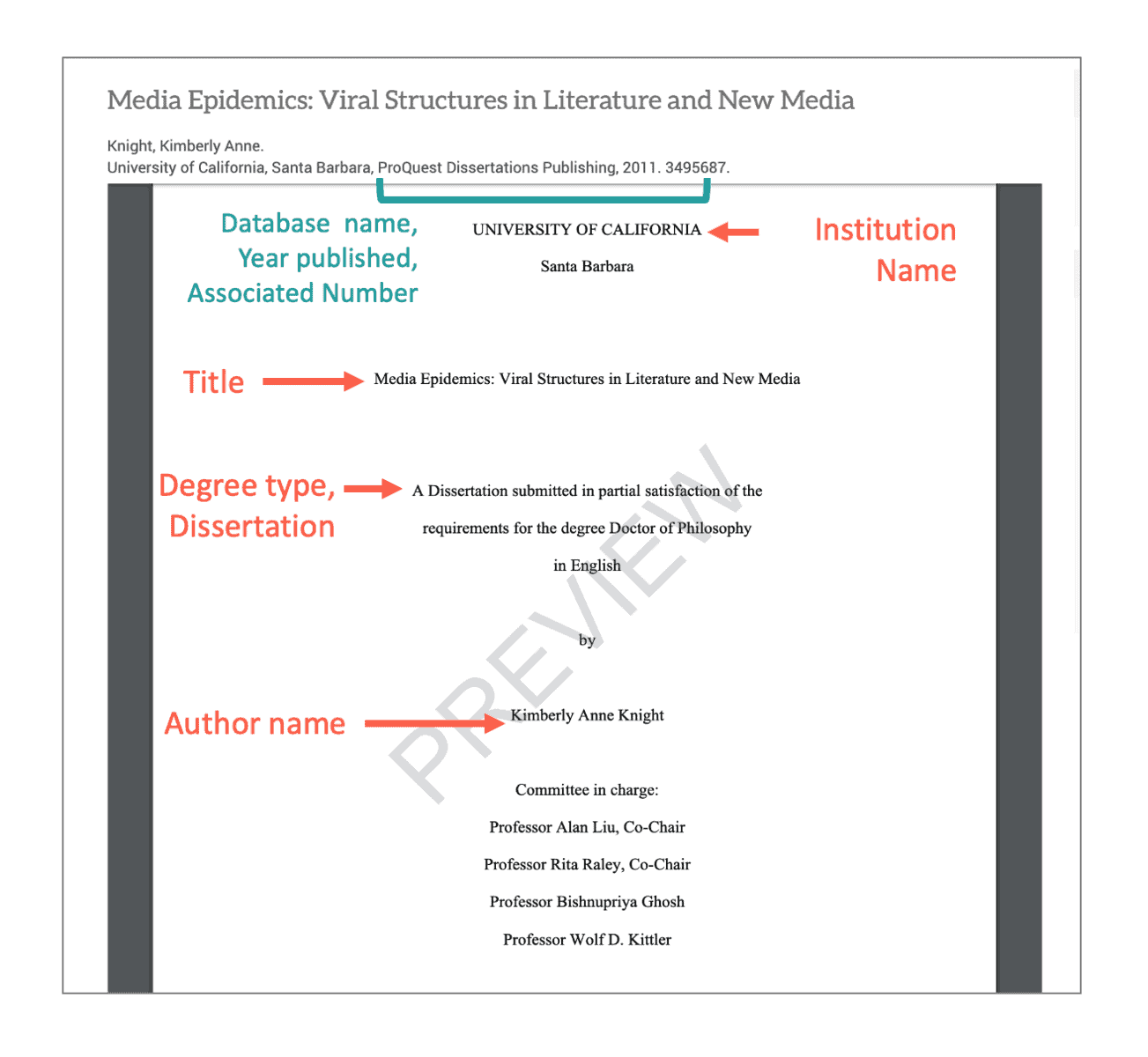
[30] Gentry C. A fully homomorphic encryption scheme [dissertation]. Stanford: Stanford University; 链接1 [31] Bayer-Fluckiger E. Ideal lattices. In: Wüstholz G, editor. A panorama of number theory or the view from Baker’s garden. Cambridge: Cambridge University Press; p. – 链接1 Jury member of ASIST Doctoral Dissertation Proposal. From Publications Committee member of ASIST. Research team member for IASL Research SIG – Research Team. Assessor for the academic qualification of a scholar in the National Institute of Education, Nanyang Technological University (Singapore) Jul 08, · Liu T () The nonlocal means denoising research based on wavelet domain. Dissertation, Xidian University. Google Scholar Ji H, Liu CQ, Shen ZW, Xu YH () Robust video denoising using low rank matrix completion. In: Abstracts of IEEE computer vision and pattern recognition. IEEE, San Francisco, pp –

No comments:
Post a Comment